
events • August 18, 2026
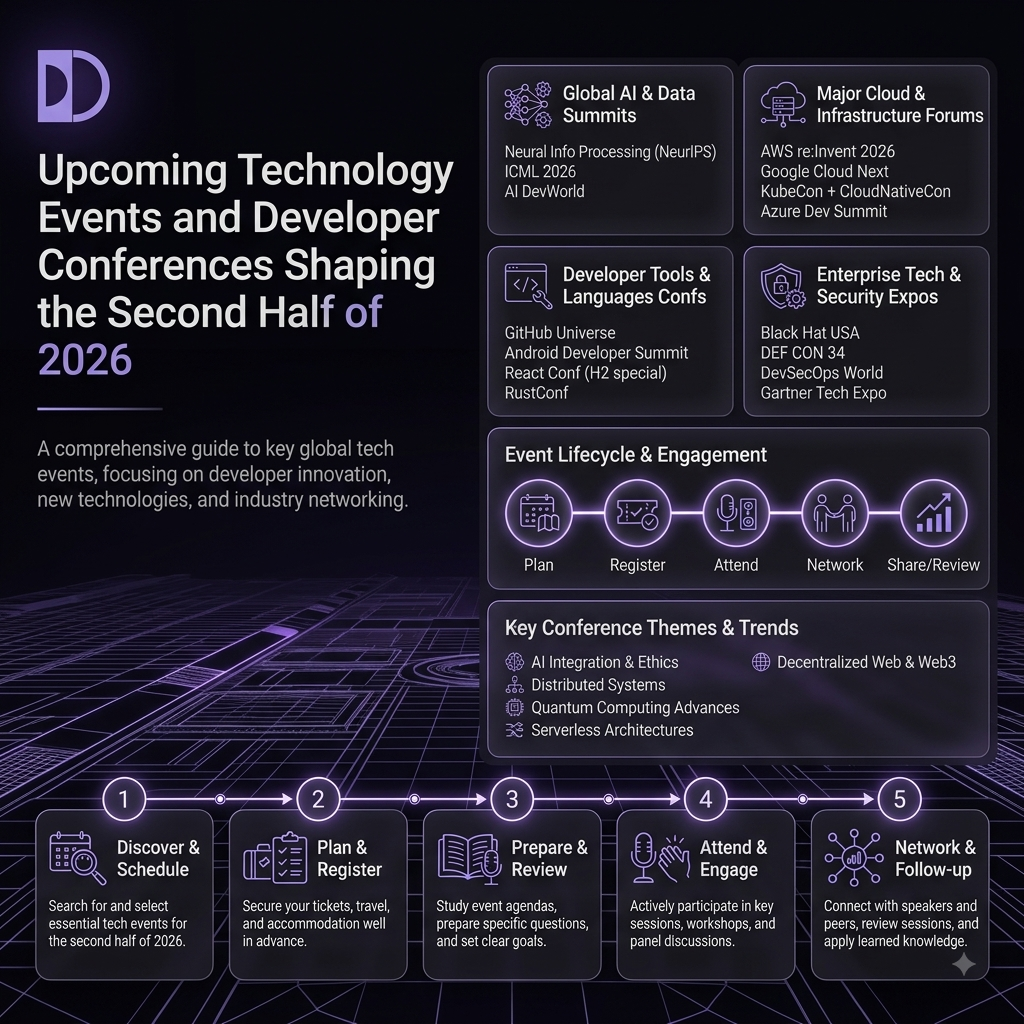
The technology calendar for 2026 is filling rapidly with events that bring together developers, IT leaders, and innovators from around the globe. As the year progresses into its second half, several major conferences have emerged as must-attend gatherings for anyone looking to stay current with emerging trends and build valuable professional connections. These events span AI, cybersecurity, web development, and quantum computing, offering diverse opportunities for learning and networking.
Planning attendance at technology conferences requires more than simply registering; it involves strategic consideration of which events align with your specific career goals and technical interests. From intimate meetups to large-scale international conferences, the upcoming schedule provides options for every level of expertise and areas of focus within the tech industry.
Artificial intelligence continues to dominate the technology conference landscape, with several major events scheduled throughout the remainder of 2026. These conferences typically feature keynote presentations from industry leaders, hands-on workshops, and showcases of the latest AI tools and frameworks. Attendees can expect to gain insights into generative AI, machine learning operations, and the practical implementation of AI solutions across various business sectors. The events often include dedicated tracks for different experience levels, from beginners exploring AI fundamentals to experienced practitioners seeking advanced technical sessions.
Networking at AI-focused conferences provides unique opportunities to connect with researchers, developers, and business leaders who are shaping the future of the technology. Many events now incorporate hackathons, demo sessions, and collaborative projects that allow participants to apply what they learn in real-time. The convergence of academic research and industry application makes these conferences particularly valuable for understanding the current state and future direction of AI technology.
Cybersecurity conferences remain essential for IT professionals seeking to understand the evolving threat landscape and defensive strategies. These events typically feature security researchers, CISOs from major organizations, and vendors showcasing the latest security tools and platforms. Topics often include ransomware defense, identity and access management, cloud security, and the integration of AI into security operations. The rapid pace of change in cyber threats makes these conferences critical for maintaining current knowledge and practices.
Hands-on training sessions at cybersecurity conferences allow attendees to practice new skills in controlled environments. Capture-the-flag competitions, vulnerability assessment workshops, and incident response simulations provide practical experience that complements the theoretical knowledge shared in keynote presentations. These practical components often prove as valuable as the networking opportunities for attendees looking to enhance their technical capabilities.
Web development conferences continue to evolve alongside the rapid changes in frontend and backend technologies. These events typically cover modern frameworks, performance optimization, accessibility, and the latest browser capabilities. Developers can explore new tools for testing, debugging, and deployment, as well as trends in progressive web apps, serverless architectures, and edge computing. The sessions often address both the technical aspects of development and the softer skills of team collaboration and project management.
The community aspect of web development conferences cannot be overstated, as these events foster connections between developers facing similar challenges and opportunities. Open source project maintainers, framework creators, and experienced developers share their knowledge and experiences, helping attendees avoid common pitfalls and adopt best practices. Many conferences also feature job fairs and recruiting sessions, making them valuable for career development as well as technical learning.
Quantum computing conferences have moved from theoretical discussions to more practical explorations of real-world applications and implementations. These events bring together researchers, hardware engineers, and software developers working on quantum algorithms, error correction, and programming languages. Attendees can learn about the current state of quantum hardware, software frameworks like Qiskit and Cirq, and the industries beginning to experiment with quantum solutions. The interdisciplinary nature of these conferences reflects the complex engineering challenges involved in quantum computing.
Emerging technology forums often accompany quantum computing events, covering areas such as neuromorphic computing, photonic integrated circuits, and advanced materials science. These gatherings provide a glimpse into the technologies that may shape computing over the coming decade. For developers and IT leaders, understanding these emerging trends is essential for strategic planning and identifying potential opportunities for innovation within their organizations.
IT leadership conferences focus on the strategic challenges facing technology executives and senior managers. These events address topics such as digital transformation, IT budget planning, team management, and aligning technology investments with business objectives. Keynote presentations often feature CIOs from major corporations sharing their experiences and lessons learned from leading large-scale technology organizations. The sessions provide valuable perspectives on balancing innovation with stability and managing technology teams effectively.
Operations and DevOps conferences complement the leadership focus by emphasizing practical implementation and process improvement. Topics include continuous integration and delivery, cloud infrastructure management, site reliability engineering, and monitoring and observability strategies. These events are particularly valuable for professionals responsible for maintaining and optimizing technology operations at scale, providing both strategic framework and tactical tools.
Regional technology conferences offer more focused experiences for developers and businesses within specific geographic areas. These events often highlight local tech ecosystems, regional industry challenges, and community-specific innovations. While they may not attract the same international attendance as major global conferences, they provide valuable networking opportunities with local peers and vendors. Many regional events also offer more accessible pricing and fewer barriers to attendance for local professionals.
Specialized tech events focus on niche areas within the broader technology landscape, such as specific programming languages, industry-specific applications, or particular development methodologies. These intimate gatherings allow for deeper dives into specific topics and often facilitate more meaningful conversations between attendees and speakers. For developers looking to master a particular technology or professionals working in specialized industries, these events can provide targeted knowledge and connections.
The technology conference landscape for the remainder of 2026 offers diverse opportunities for professional development, networking, and staying current with industry trends. By carefully selecting events that align with personal career goals and technical interests, developers and IT leaders can maximize the value of their conference attendance. The combination of learning opportunities, peer connections, and exposure to new technologies makes these events indispensable components of a tech professional's growth strategy.
Strategic planning around conference attendance should consider factors such as timing, budget, travel requirements, and specific session content. Many professionals find that attending two to three well-chosen conferences per year provides optimal balance between learning opportunities and maintaining day-to-day work responsibilities. As the technology sector continues to evolve rapidly, these in-person and virtual gathering points remain essential for building the knowledge and relationships that drive innovation and career advancement.
More From the Blog
Contact Me
for any advice
