
AI • August 17, 2026
The rapid expansion of generative AI has transformed from experimental pilots to core business infrastructure, but organizations now face a complex pricing landscape that varies dramatically between providers and usage patterns. Understanding these cost structures is essential for building sustainable AI strategies that deliver real ROI without unexpected budget overruns. This article explores practical approaches to evaluating, comparing, and optimizing AI model expenditures across different organizational needs.
Modern enterprises must develop sophisticated frameworks for AI spend management as model capabilities proliferate and pricing structures become increasingly nuanced. From per-token pricing to seat-based licenses, the financial models underpinning AI adoption require careful analysis to align technology investments with business objectives.
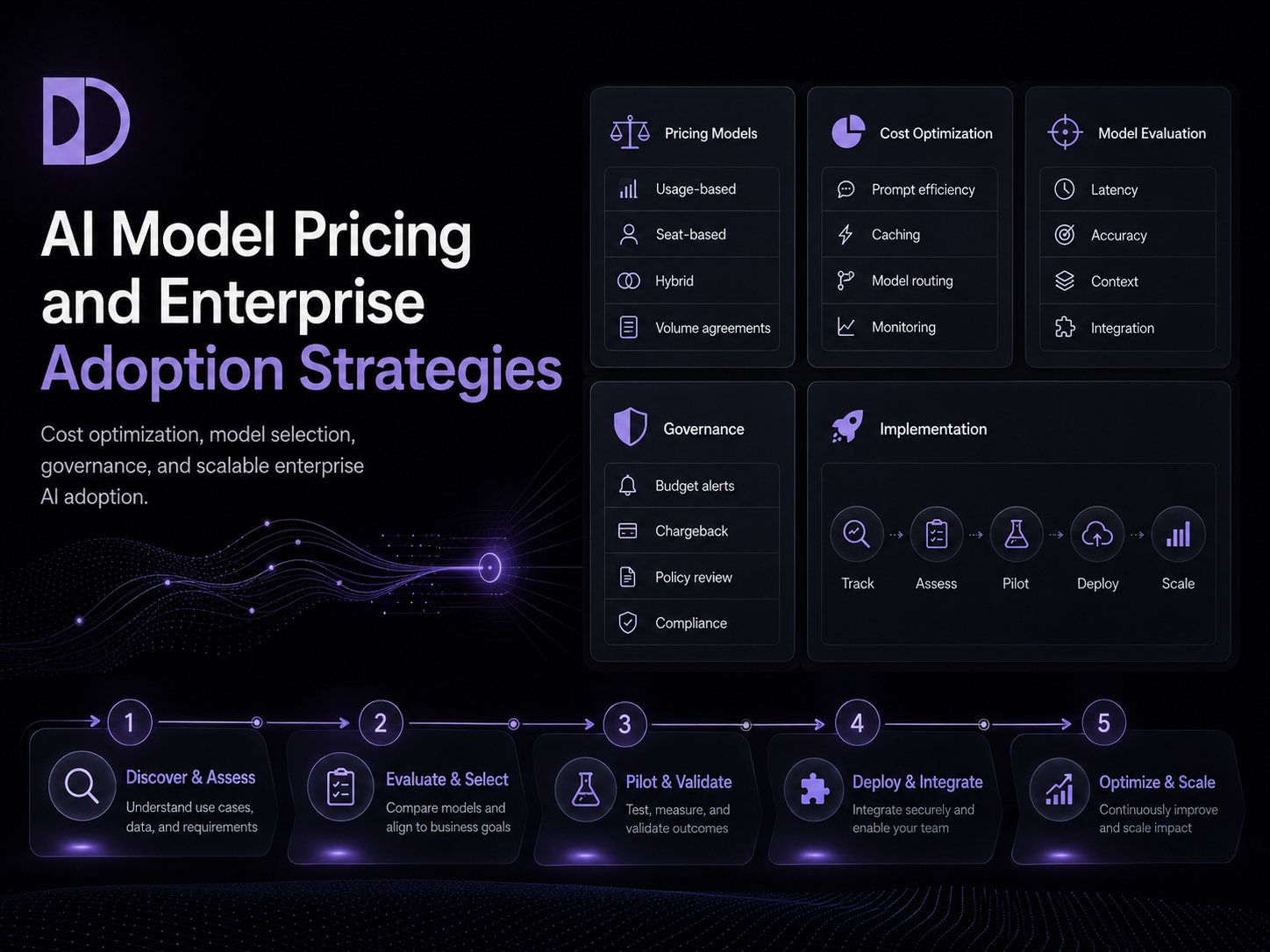
The AI pricing ecosystem has matured beyond simple subscription tiers, with major providers offering diverse structures that reflect different usage patterns and value propositions. OpenAI, Anthropic, Google, and emerging competitors each employ distinct pricing mechanisms ranging from per-token charges to tiered enterprise agreements, creating a fragmented landscape that demands careful comparison. Organizations must evaluate not only the headline costs but also the hidden expenses associated with integration, monitoring, and optimization that can significantly impact total cost of ownership. The choice of pricing model often reflects the intended use case, with development experiments requiring different structures than production-grade deployments serving thousands of users.
Recent market analysis indicates that pricing transparency has improved, but significant variance remains between similar capabilities offered by different vendors, making direct comparison challenging without detailed usage profiling. Enterprises should approach pricing evaluation with a clear understanding of their expected workloads, performance requirements, and budget constraints to avoid costly misalignments. This section provides a framework for assessing which pricing structure best matches specific operational needs and growth trajectories.
Effective cost optimization begins with rigorous monitoring and analytics to understand actual usage patterns and identify opportunities for efficiency improvements across AI workloads. Organizations should implement comprehensive tracking mechanisms that capture not just token consumption but also compute resources, storage costs, and associated infrastructure expenses that contribute to the total AI expenditure. Establishing baseline metrics enables teams to detect anomalies, recognize seasonal patterns, and quantify the impact of optimization initiatives over time. The most successful enterprises treat AI cost management as an ongoing process rather than a one-time setup activity, continuously refining their approaches as usage evolves.
Several practical strategies can significantly reduce unnecessary spending, including prompt engineering to minimize token usage, caching frequent responses to avoid redundant computations, and selective model routing based on task complexity and cost-per-performance ratios. Organizations can also benefit from implementing quota management policies that prevent runaway costs during development testing or unexpected traffic spikes. By combining technological controls with governance processes, teams create a sustainable framework that balances innovation enablement with financial discipline.
Selecting the right AI model requires a systematic assessment of capabilities relative to specific business use cases, performance requirements, and compliance considerations that vary significantly across industries. Organizations must look beyond benchmark scores to evaluate real-world performance characteristics such as latency, accuracy on domain-specific tasks, and reliability under production workloads. The evaluation process should include hands-on testing with representative datasets that reflect the actual problems the AI system will solve, rather than relying solely on published performance metrics. This practical assessment approach helps prevent the common pitfall of over-investing in capabilities that exceed actual operational needs.
Different business functions often benefit from different model characteristics, with customer service applications prioritizing response coherence and speed, while research and development may value deeper reasoning capabilities and extensive context windows. Understanding these trade-offs enables enterprises to match model selection to functional requirements without paying for unused features. This section guides readers through a structured evaluation framework that incorporates technical requirements, budget constraints, and risk tolerance into a comprehensive decision matrix.
Establishing robust AI governance frameworks is essential for ensuring responsible usage while maintaining financial accountability across organizations of all sizes. These frameworks should define clear policies for model selection, usage approval processes, and compliance monitoring that align with both internal policies and external regulations. Governance structures typically include stakeholder review committees, documented approval workflows, and regular audits of AI deployments to verify adherence to established standards. By embedding governance into the AI lifecycle, organizations can mitigate risks related to bias, security, and unintended consequences while ensuring expenditures align with strategic priorities.
Cost accountability mechanisms such as chargeback models, budget alerts, and performance-based metrics help translate technical decisions into financial consequences that business stakeholders can understand and act upon. These mechanisms create transparency around who is using AI resources, for what purposes, and at what cost, enabling more informed decision-making at all organizational levels. The most effective approaches combine technical controls with clear communication channels between engineering teams and financial leadership.
The AI market continues to evolve rapidly with new pricing models, provider expansions, and competitive dynamics reshaping the landscape throughout 2026 and beyond. Emerging trends include usage-based pricing that scales with actual consumption, hybrid models combining fixed commitments with variable usage charges, and specialized offerings targeted at specific industry verticals or use cases. These developments reflect maturing market understanding as providers seek to balance accessibility for experimentation with sustainability for production deployments. Organizations must stay informed about these shifts to adapt their strategies accordingly and capture value from new opportunities while avoiding obsolete approaches.
The convergence of AI with other technology trends such as edge computing, IoT, and enterprise software platforms is creating new pricing dimensions that reflect integrated value propositions rather than isolated model access. This shift toward bundled offerings requires enterprises to evaluate total solution cost rather than focusing solely on model pricing components. Understanding these broader market dynamics enables more strategic purchasing decisions that consider the full spectrum of value and cost factors across the technology ecosystem.
Implementing effective AI cost management requires a systematic approach that combines technology tools, process improvements, and organizational alignment to create sustainable financial practices. The implementation journey typically begins with a comprehensive audit of existing AI expenditures to establish baseline understanding before introducing optimization initiatives and governance structures. Organizations should prioritize quick wins such as implementing usage monitoring and setting initial budget thresholds while simultaneously planning more comprehensive governance frameworks. This phased approach allows teams to demonstrate value early while building the foundation for long-term cost control capabilities.
Key implementation steps include selecting appropriate monitoring tools, establishing cost allocation methodologies, defining approval processes for new AI deployments, and creating regular review cadences with stakeholder participation. Success factors include executive sponsorship, cross-functional collaboration, and clear communication of objectives and expectations across the organization. By following structured implementation guidance, enterprises can transform AI from a cost center into a strategically managed investment that delivers consistent value over time.
Navigating the complex landscape of AI model pricing requires a balanced approach that combines technical understanding, strategic planning, and ongoing governance to achieve sustainable enterprise adoption. Organizations that invest in building comprehensive cost management frameworks position themselves to maximize AI value while minimizing financial risk and unexpected expenditures. The key lies in treating AI cost management as a continuous practice rather than a one-time setup activity, with regular assessment and adaptation as technology and business needs evolve. By following the strategies and frameworks outlined in this article, enterprise leaders can make informed decisions that align AI investments with strategic objectives and deliver measurable return on investment.
The rapidly evolving AI pricing ecosystem demands that organizations remain agile and informed, continuously evaluating new models, pricing structures, and market dynamics to maintain competitive advantage. Enterprises should develop internal capabilities for cost analysis, model evaluation, and governance that enable rapid adaptation to changing conditions without sacrificing innovation momentum. Ultimately, successful AI adoption hinges on the ability to translate technical capabilities into business value while maintaining financial discipline that supports long-term strategic objectives.
More From the Blog
Contact Me
for any advice
